Aaina Mahal Bhuj
Bhuj, Gujarat 370001
If you are planning to visit Aaina Mahal Bhuj, we at Rann Utsav Stays can help you plan your itinerary, arrange and book your stay and travel, or get you a customised tour package.
The Aaina Mahal, or "Palace of Mirrors," is a masterpiece from the 18th century. Commissioned by the ruler Maharao Lakhpatji, it’s a mix of Indian and European styles. The palace gets its name from its incredible Hall of Mirrors, a room designed to sparkle and shimmer under the light of a single candle flame. Although it suffered damage in the 2001 earthquake, its soul and most stunning sections have been beautifully preserved. Try to visit on a weekday morning to avoid the weekend rush.
The Palace of Mirrors: A Dazzling Glimpse into Royal Indulgence at Aaina Mahal
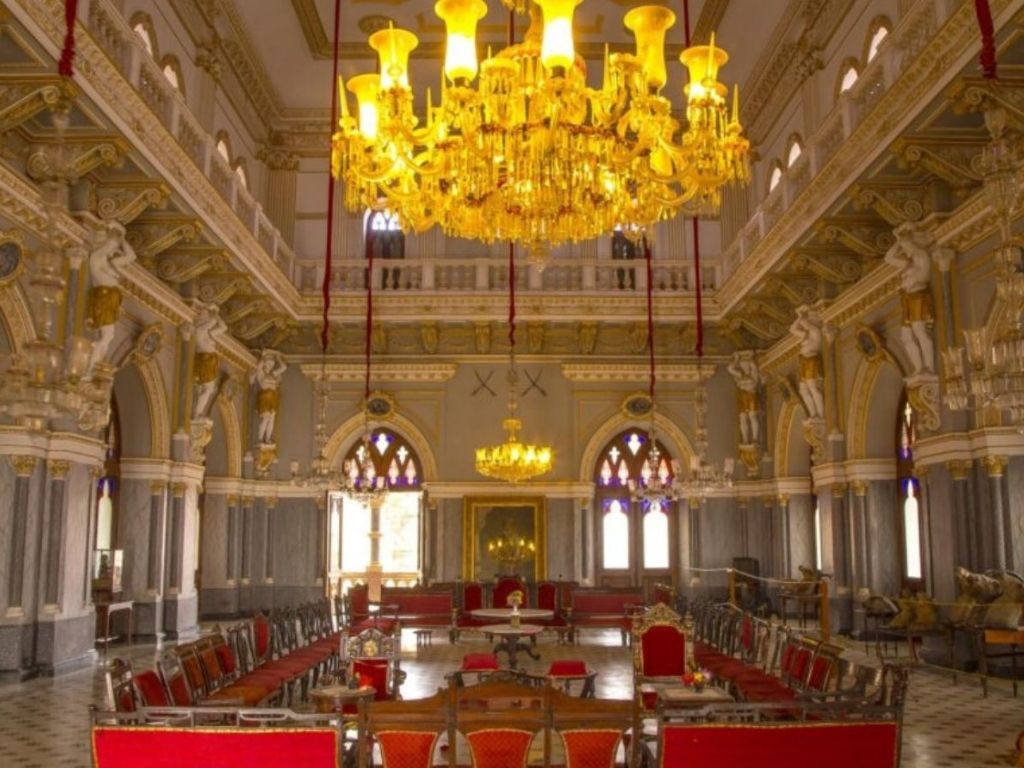
Step into a world of dazzling reflections, intricate artistry, and Venetian splendor right in the heart of Bhuj's old city. The Aaina Mahal, or the 'Palace of Mirrors', is a magnificent and unique 18th-century palace that stands as a testament to the flamboyant and art-loving ruler, Maharao Lakhpatji. With its halls lined with mirrors, its stunning blue and white Delft-style tiles, and its collection of European art and curiosities, this palace is a mesmerizing blend of Indian craftsmanship and European aesthetics. A visit here is like stepping into a royal jewel box, a must-see destination that offers a fascinating glimpse into the opulent lifestyle of Kutch's former rulers.
What Makes Aaina Mahal a Unique Royal Palace
This historic palace, located within the Darbar Gadh complex, offers a distinct and artistically rich experience.
- The Spectacular Hall of Mirrors: The main highlight is the 'Hira Mahal', the Maharao's bedroom, where every inch of the walls and ceiling is covered in mirrors and gilded ornaments, creating an endlessly dazzling effect.
- A Fusion of Art and Architecture: The palace was designed by the visionary artist-craftsman Ram Singh Malam, who trained in Europe. His unique style brilliantly fuses European elements like Venetian-style glass, candelabras, and Delft tiles with traditional Kutchi craftsmanship.
- A Treasure Trove of Royal Artifacts: The palace serves as a museum showcasing a fascinating collection of royal possessions, including paintings, photographs, royal palanquins, weaponry, and intricate ivory work.
- The Perfect Historical Pairing: Aaina Mahal is located right next to the grand, Gothic-style Prag Mahal. Visiting both palaces together provides a stunning contrast between two different eras of royal Kutch architecture and is an essential part of any Bhuj city tour.
History and Significance
Built during the reign of Maharao Lakhpatji in the mid-18th century, Aaina Mahal was designed to be a place of pleasure, art, and music. Its creator, Ram Singh Malam, was a Kutchi sailor who was shipwrecked in Holland, where he spent years learning European arts and crafts like clock-making, cannon-founding, and tile-making. Upon his return, he created this unique palace for the Maharao, a masterpiece that was unlike anything seen in India at the time. Though parts of the palace were damaged in the 2001 earthquake, the main halls have been beautifully restored, preserving this unique artistic vision.
The Experience: A Walk Through Dazzling Corridors
Your visit to Aaina Mahal is a journey through a series of opulent rooms and corridors. The tour is a feast for the eyes. You will be amazed by the 'Fuvara Mahal' (Fountain Hall), where fountains once sprayed perfumed water, and the Music Hall, with its beautiful Belgian chandeliers. The highlight, of course, is the Hall of Mirrors. The guide will often light a single candle in the darkened room to demonstrate how the thousands of mirrors would have created a breathtaking, star-lit effect for the king. The experience is one of pure wonder at the sheer artistry and indulgence of a bygone royal era.
Aaina Mahal: Key Information
| Location | Darbar Gadh, Old City, Bhuj, Gujarat 370001 (Next to Prag Mahal). |
| Timings | 9:00 AM – 12:00 PM & 3:00 PM – 6:00 PM (Closed on Thursdays). |
| Entry Fee | Approx. ₹20 per person (Camera fees are extra, subject to change). |
| Time Required | 1 to 1.5 hours. |
| Famous For | Hall of Mirrors, Indo-European architecture, Royal artifacts. |
How Rann Utsav Stays Creates Your Royal Bhuj Tour
Aaina Mahal is a cornerstone of Bhuj's royal history and a highlight of any city tour. At Rann Utsav Stays, we design our Kutch tour packages to give you a comprehensive experience of the Darbar Gadh complex. We ensure your itinerary includes a visit to both Aaina Mahal and Prag Mahal, allowing you to appreciate their contrasting styles. Our expert guides can narrate the fascinating story of Ram Singh Malam and Maharao Lakhpatji, bringing the history of this dazzling palace to life.
Guest Reviews & Ratings
Rann Utsav Stay Options


Frequently Asked Questions
What does 'Aaina Mahal' mean?
'Aaina' is the Hindi/Gujarati word for 'Mirror,' and 'Mahal' means 'Palace.' Therefore, Aaina Mahal literally translates to 'The Palace of Mirrors,' named after its most famous and spectacular hall.
Was Aaina Mahal damaged in the 2001 earthquake?
Yes, the palace suffered significant damage in the 2001 earthquake. The upper floors were heavily damaged, but the main halls on the ground floor, including the Hall of Mirrors, have been carefully restored and are open to the public.
Do I need a guide for Aaina Mahal?
While you can walk through on your own, hiring a local guide at the entrance is highly recommended. The guides are very knowledgeable about the history of the palace and its unique artifacts and can perform demonstrations, like the famous candle lighting in the Hall of Mirrors.
Is Aaina Mahal a part of Prag Mahal?
They are two separate palaces but are located in the same walled royal complex, known as the Darbar Gadh. They are right next to each other, and you buy separate tickets for each, making it very easy to visit both in one go.
What is the most unique feature of Aaina Mahal?
Its most unique feature is the Indo-European fusion style, which was revolutionary for its time. This was the vision of its creator, Ram Singh Malam, who combined the skills he learned in Europe with Indian aesthetics to create a palace unlike any other in India.